One modular platform. Multiple tumor antigens. Scalable manufacturing.
Off-the-Shelf Plasmid DNA Vaccines
Ready-made, standardized plasmid DNA constructs that encode tumor antigens. Each indication uses a distinct antigen-encoding construct on the same circular plasmid backbone, enabling rapid development and scalable manufacturing.
Standardized, ready-to-administer product
Modular: swap antigen genes per indication
Intramuscular administration
Personalized mRNA Vaccines
Individualized mRNA vaccines designed around the specific antigen profile of each patient, directing a precise immune response against disease — in cancer and in autoimmune conditions.
Patient-specific antigen selection
Applications in oncology & autoimmunity
Complements the off-the-shelf DNA platform
How the plasmid DNA cancer vaccine works
From a ready-made DNA construct to an antigen-specific immune attack on cancer cells, in five steps.
1
Plasmid DNA Construct
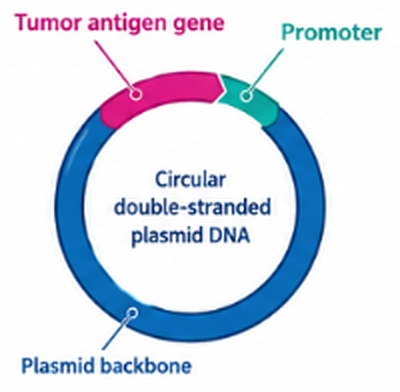
A circular, double-stranded plasmid carries a tumor antigen gene and promoter on a plasmid backbone.
Ready-made DNA construct
2
Standardized Vaccine Product
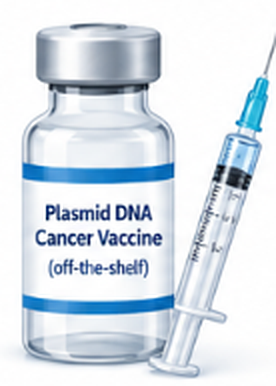
The construct is formulated as an off-the-shelf, standardized vaccine.
Off-the-shelf
3
Administration
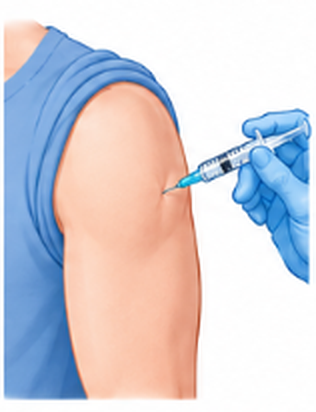
The vaccine is delivered by intramuscular injection.
Intramuscular injection
4
Cellular Expression & Antigen Processing
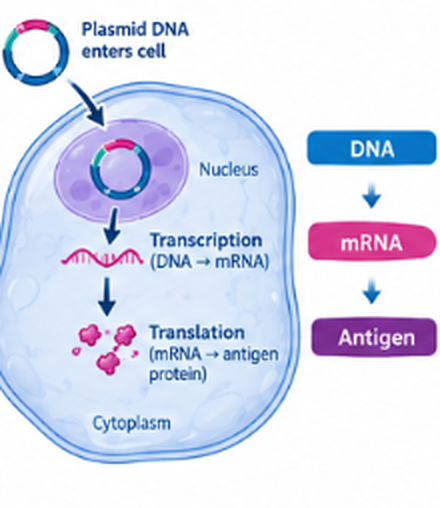
Plasmid DNA enters the nucleus, is transcribed to mRNA and translated into antigen protein.
DNA → mRNA → Antigen
5
Antigen-Specific Immune Response
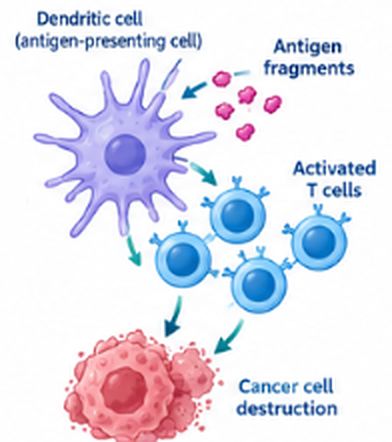
Dendritic cells present antigen fragments, activating T cells that target and destroy cancer cells.
Cancer cell destruction
Modular platform — different antigen constructs for each indication
Gastric cancer
HER2
Distinct antigen-encoding construct
Breast cancer
HER2
Distinct antigen-encoding construct
Ovarian cancer
Selected tumor antigens
Distinct antigen-encoding construct
Conceptual mechanism illustration; investigational platform, not an approved cancer treatment.